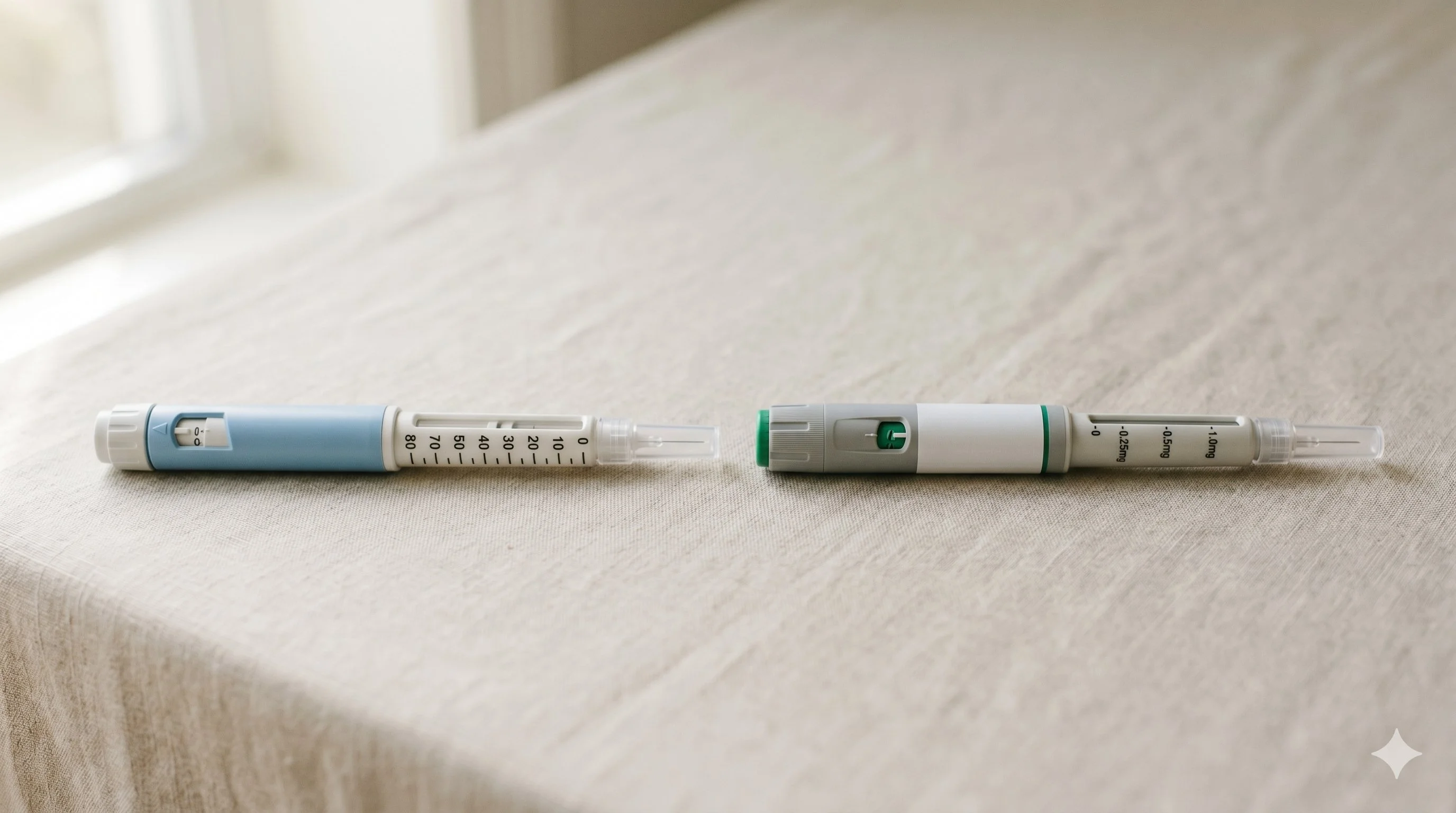
I was reading something about diabetes medication last week and the word Ozempic came up for the third time that day. I had a vague idea it was for diabetes and a vaguer idea it was somehow connected to weight loss. So I typed the most basic question I could think of into Gemini. Is Ozempic insulin? I expected a one line answer. What I got instead was a much better explanation of how the body manages blood sugar than anything I remember from school.
Here is what I learned, written the way I would explain it to a friend who asked me the same question over chai.
The short answer firstNo, Ozempic is not insulin
Insulin is a hormone your pancreas already makes. Its job is to grab sugar floating in your blood and push it into your cells, where it gets used for energy. When someone takes insulin as medicine, they are topping up or replacing what their own body is not making or using properly.
Ozempic works on a completely different principle. The active ingredient is semaglutide, a man-made copy of a gut hormone called GLP-1. Instead of doing insulin's job for it, Ozempic nudges your own pancreas to do a better job of making and releasing insulin on its own, but only when it is actually needed.
Insulin is a direct replacement. Ozempic is closer to a manager that tells your pancreas when to show up to work. That one distinction explains almost every other difference between the two drugs.
Three things Ozempic does inside your body
I assumed a diabetes drug would have one job. Ozempic has three, and they all work together.
First, it tells the pancreas to release insulin, but strictly when blood sugar is already high. That condition matters a lot, and I will come back to it. Second, it stops the liver from dumping its stored sugar into the bloodstream, which is one of the quieter ways blood sugar spikes between meals. Third, it slows down how fast food leaves your stomach, which is why people on Ozempic report feeling full for longer. That slower digestion is also doing double duty as the reason it gets used for weight loss.
Direct replacement
Moves glucose into cells regardless of context. Works fast, but the dose has to be matched carefully to food and activity.
Conditional nudge
Triggers your own insulin release only when blood sugar is high, and works on appetite and digestion at the same time.
Why Ozempic rarely causes a sugar crash
This was the part that made the whole thing click for me. Injected insulin does not know what you have eaten or how much you have walked that day. If the dose is even slightly off from what your body needs in that moment, your blood sugar can drop too low, which is hypoglycaemia. That is why people on insulin are taught to track meals and carry glucose tablets.
Ozempic mostly avoids this problem by design. It only switches on insulin release when your blood sugar is already elevated. Once your levels come back down, that signal turns off too. There is no constant push regardless of context, so a low sugar crash from Ozempic alone is uncommon. Combine it with insulin or certain other diabetes drugs and the risk changes, which is exactly the kind of detail a doctor needs to manage, not something to self adjust.
The other big differenceWhy one causes weight loss and the other often causes weight gain
I did not expect this part. Insulin's entire function is to push sugar into cells for storage. When someone needs higher doses over time, more of that sugar ends up stored as fat, which is why weight gain is a common and frustrating side effect of long term insulin use.
Ozempic moves in the opposite direction almost by accident. Because it slows digestion and acts on the appetite centres in the brain, most people simply eat less without consciously trying to. That side effect turned out to be so significant that semaglutide now has a separate brand, Wegovy, sold specifically for weight management rather than diabetes.
Since I was already down this road
What Ozempic actually costs in India right now
Once I understood what the drug does, the obvious next question was what it costs here, since I keep seeing it mentioned in the same breath as weight loss programs aimed at Indian readers.
The timing turned out to be interesting. The Indian patent on semaglutide expired in March 2026. Within days, more than a dozen Indian pharma companies, including Natco, Dr. Reddy's, Sun Pharma, Cipla, and Zydus, launched their own approved versions of the same molecule. Novo Nordisk, the company that makes Ozempic, responded the following month by cutting its own Indian prices by close to 40 percent to stay competitive.
₹5,660
Branded Ozempic, starting dose
₹1,290
Cheapest generic, starting dose
Mar 2026
Patent expiry that triggered it
That is roughly a fourfold difference for the same active molecule, just in a different box with a different manufacturer's name on it. The generics went through India's own approval pathway, which requires completed clinical trials in Indian patients rather than just proving the molecule is chemically equivalent, so the gap in price is not really a gap in scrutiny.
Whatever the price, this is squarely a prescription drug, not something to start on your own based on a blog post or a chat with an AI model. Both Ozempic and its generics need a doctor's supervision, since dosing is gradual and the interaction with other medication, especially insulin itself, needs proper monitoring.
Frequently asked
No. Ozempic, whose active ingredient is semaglutide, is a GLP-1 receptor agonist, a completely different drug class from insulin. Insulin replaces a hormone your body should already be making. Ozempic instead prompts your pancreas to release more of its own insulin, but only when blood sugar is high, while also slowing digestion and reducing how much sugar your liver releases.
Ozempic only signals the pancreas to release insulin when blood glucose is already elevated, and that signal switches off once levels normalise. Injected insulin has no such built in condition, so a dose that does not match your food intake or activity for the day can push blood sugar too low. This is why Ozempic rarely causes hypoglycaemia when used on its own.
Insulin's main job is pushing glucose into cells for storage, and over time that stored energy frequently shows up as added weight. Ozempic slows down digestion and acts on appetite centres in the brain, so most people simply eat less without trying to. That side effect was significant enough that the same molecule is now sold separately as Wegovy, specifically for weight management.
Branded Ozempic starts at around Rs 5,660 a month for the 0.25 mg starting dose, after Novo Nordisk's April 2026 price cut. Since India's semaglutide patent expired in March 2026, DCGI approved generic versions from companies such as Natco, Dr. Reddy's, and Sun Pharma have launched at much lower prices, with some starting below Rs 1,500 a month for the identical active molecule.
Generic semaglutide approved by India's drug regulator, CDSCO, contains the same active molecule as branded Ozempic. The differences sit in the manufacturer, the injection device, which may be a vial or a pre filled pen, and the price. These generics were approved through a pathway that requires completed clinical trials in Indian patients, not just proof that the molecule is chemically equivalent.