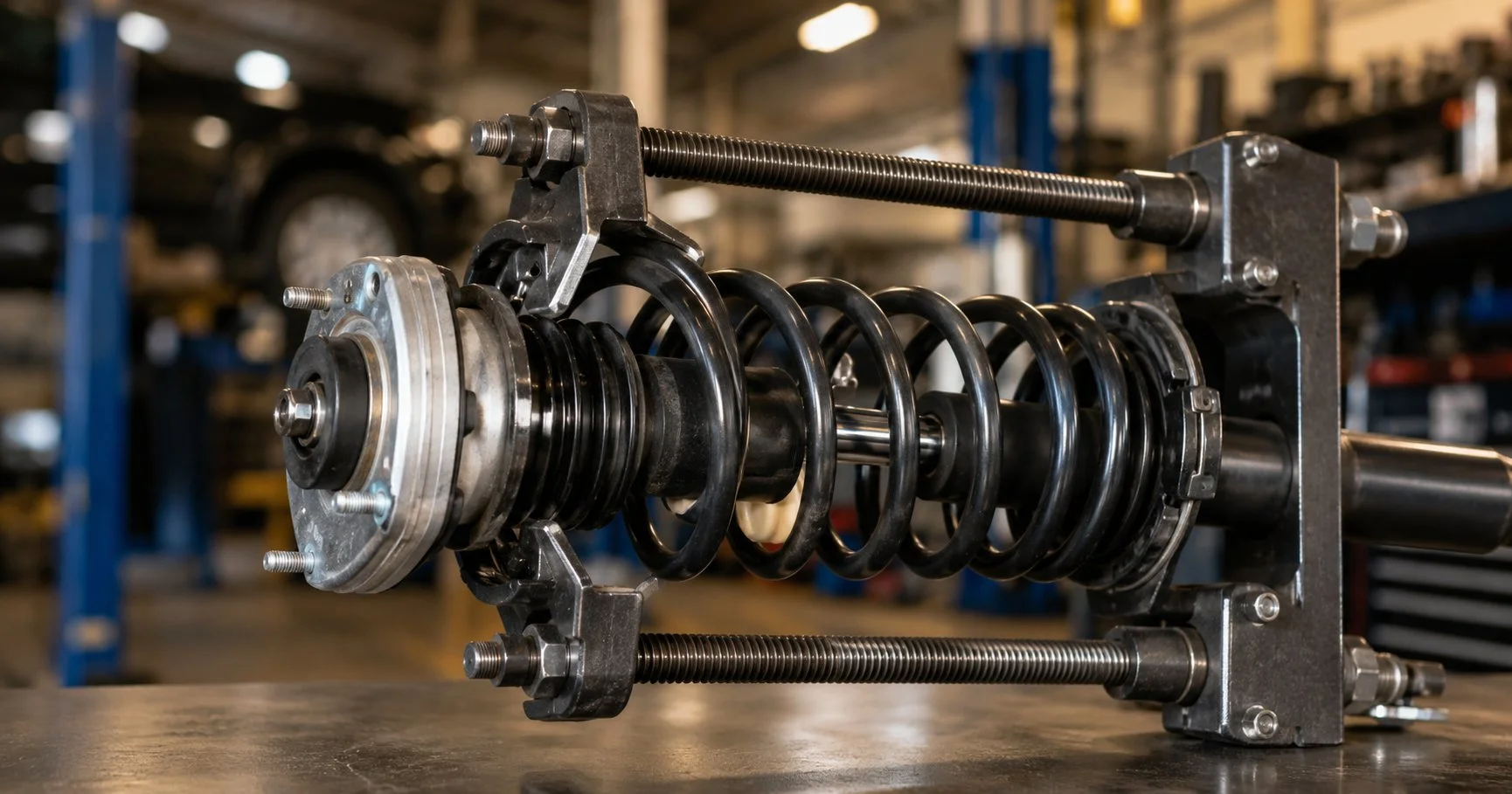
A rear suspension refresh on a German sedan or SUV in India routinely comes back with a quote north of ₹60,000. Most owners assume the dealership is padding the bill, since the job sounds like it should cost a fraction of that. The honest answer is more interesting than a simple yes or no. Some of the price is genuinely justified by how these parts are engineered. Some of it is a packaging tax that disappears the moment you know where else to look.
Here is a real example of one such quote, broken down piece by piece, along with what actually changes if you take the same job to an independent garage instead.
The number that starts most of these conversationsWhat a typical dealership quote actually includes
The quote is rarely just for two shock absorbers. It usually arrives as a full rear suspension refresh, the kind dealerships push because their service software will not let a technician quote half a job. Here is what shows up on a typical invoice.
₹41,368
Shocks, pair
₹14,084
Top mounts, pair
₹8,574
Bump stops & bolts
Add it up and parts alone come to ₹64,026, before labour. The instinctive reaction is that this feels like padding, the kind of thing where a service centre throws in extra line items because it can. That is not quite what is happening.
Why the extras are not optionalThe mount and the bump stop are not upsells
The top mount is the metal plate that bolts the strut to the car's chassis. If it develops a clunk over bumps, that is usually the rubber bushing inside wearing out, not the shock itself. The bump stop is the foam cushion that stops the suspension from slamming into its own limit, and it dries out and crumbles with age. Bolting a brand new shock onto an old, worn mount is a bit like putting new tyres on bent rims. The new part does not get to perform the way it is designed to.
The bolts are a separate story. German manufacturers treat suspension fasteners as single use, what the industry calls torque to yield. Once a bolt is tightened to factory spec, it stretches very slightly at a molecular level. Reusing it after that is technically a safety compromise, since it no longer holds tension the way a fresh bolt does. That is why a handful of bolts and screws can add up to over ₹3,500 on an invoice. It is not filler. It is the manufacturer's own policy for keeping the two year parts warranty valid.
If you skip the mounts and hardware to save money at an authorized dealership, you do not just risk a worse ride. You can lose the manufacturer warranty on the new shock absorbers entirely, since the brand requires the full kit to be replaced together.
The genuine part and the aftermarket part often come off the same line
Here is the detail that changes the whole conversation. ZF Sachs, the German supplier whose name shows up constantly in suspension parts, is not just a competitor to BMW. Sachs is one of the original equipment manufacturers that BMW contracts to build the shock absorbers that come fitted on the car from the factory. The exact same hydraulic strut leaves the same production line and then splits into two different boxes.
BMW corporate box
Same part, stamped with the BMW logo, sold through the dealership network at full retail markup.
Sachs supplier box
Same part, stamped with the Sachs logo, sold through the independent aftermarket at a fraction of the price.
Bilstein and Meyle are the other two names worth knowing. Bilstein supplies factory parts for some higher performance BMW trims and their standard B4 line uses a gas pressure design that some owners find slightly firmer and more controlled than the stock Sachs unit. Meyle is not a direct factory supplier for this part, but they are known for reinforcing weak points in the original design, so their HD range tends to hold up well on rough roads.
The comparison that matters mostDealership price versus the independent route
Once you know that genuine and aftermarket can mean the same hardware, the price gap stops feeling justified and starts looking like a packaging tax. Here is how the same job lines up.
| Component | Dealership, genuine | Independent, German OEM |
|---|---|---|
| Rear shocks, pair | ₹41,368 | ₹16,000 to ₹20,000 |
| Top mounts, pair | ₹14,084 | ₹4,500 to ₹6,000 |
| Bump stops & bolts | ₹8,574 | ₹1,000 to ₹2,500 |
| Estimated total | ₹64,026 | ₹23,000 to ₹29,500 |
That is close to a 50 percent saving for what is, in the case of Sachs, literally the same component. The dealership price is not dishonest. It includes a verified part, a documented service history, and a manufacturer backed warranty. You are paying for the paperwork and the peace of mind as much as the metal.
For anyone in Kerala doing this search
Where to actually source these parts
German performance parts are not the kind of thing you find at a roadside shop, so it is worth knowing where they actually come from locally. Most premium parts in Kerala move through Kochi first. Southern Wings in Vyttila and Torqone Automotive in Kalamassery are two of the larger distributors that stock Sachs, Bilstein, and Meyle components and can courier them to Thiruvananthapuram within a day.
For anyone who would rather not order parts directly, independent luxury car workshops in the city already have daily supply lines into these distributors. Asking for a specific brand by name, ZF Sachs or Bilstein B4, tends to get a wholesale price quoted rather than letting the job default to whatever generic part happens to be on the shelf. That one detail in the conversation can change the quote considerably.
How to think about itDealership or independent: what actually decides it
The deciding factor is mostly warranty status. If the car is still under factory warranty, the dealership's higher quote is fair and arguably the safer choice, since any defect down the line gets covered without a fight over which workshop touched the car. Once the warranty period is over, the independent route with identical German OEM parts becomes the more sensible call, since the saving is close to fifty percent for the same hardware. Nobody is trying to overcharge anyone in this scenario. The dealership is simply offering the most expensive of several legitimate options, and nobody is obligated to mention the cheaper ones.
Frequently asked
Genuine rear shock absorbers for cars like the BMW X1 typically cost Rs 19,000 to Rs 21,000 per piece at an authorized dealership. You are paying for the part itself, the branded packaging, dealership margin, and the mandatory mounting hardware the brand requires for the warranty to remain valid.
Yes, in most cases. ZF Sachs is one of the original suppliers that manufactures shock absorbers on the assembly line itself. The same part is sold in a Sachs box for the aftermarket and in a manufacturer box for the dealership network, often at half the price in the Sachs packaging.
German manufacturers treat suspension bolts as single use, torque to yield fasteners. Once tightened to factory spec and removed, they lose strength and are not safe to reuse. Fresh mounts and bump stops alongside new shocks are also required to keep the manufacturer warranty valid, since worn rubber components can wear out a new shock faster.
Specialized parts distributors in Kochi such as Southern Wings in Vyttila and Torqone Automotive in Kalamassery stock premium European car components and can courier to other parts of Kerala within a day. Independent luxury car workshops in Thiruvananthapuram also maintain direct supply lines with these distributors and can source the parts for you.
Go to the dealership if your car is still under factory warranty or you want a documented service history with zero ambiguity. Go independent once the warranty period is over, since you can use identical German OEM parts like Sachs or Bilstein and save roughly 50 percent on the same job.